
Bernd Resch
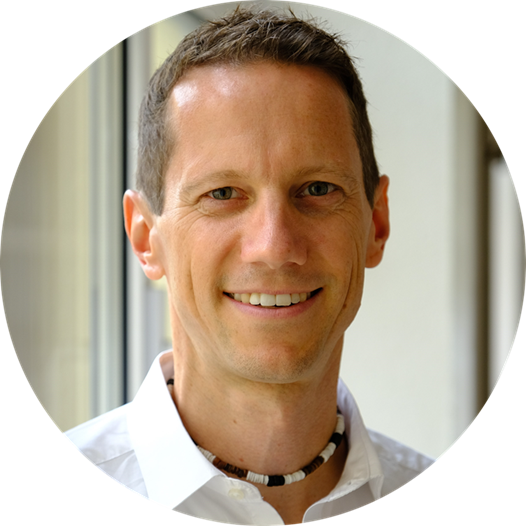
Bio: Bernd Resch is a Full Professor of Geo-social AI at IT:U, Austria and a Visiting Scholar at Harvard University's Center for Geographic Analysis. Bernd Resch did his PhD in the area of “Live Geography” (real-time monitoring of environmental geo-processes) together with University of Salzburg and MIT. Prior to joining IT:U, he held positions of Associate Professor and Faculty Speaker at University of Salzburg (Austria), Research Director at Heidelberg University (Germany), and Research Affiliate at Massachusetts Institute of Technology - MIT (USA). His research interest revolves around understanding cities as complex systems through analysing a variety of digital data sources, focusing on developing multimodal GeoAI machine learning algorithms to analyse human-generated data like social media posts, mobile phone data and physiological measurements from wearable sensors. The findings are relevant to a number of fields including urban research, disaster management, epidemiology, and others. Bernd received the prestigious Theodor Körner Award for his work on “Urban Emotions”. He also established the iDEAS:lab and the Digital City studio, two multi-functional outreach and science communication laboratory environment. Amongst a variety of other functions, he is an Editorial Board Member of IJHG, IJGI and PLOS ONE, a scientific committee member of various international conferences (having chaired several conferences), and an Executive Board member of Spatial Services GmbH.
Title: Multimodal GeoAI: User-generated Data-Enabled Sensing and Actuating
Abstract: User-generated data have become a valuable resource for geospatial decision-making, offering unprecedented insights into human behaviour, perception, and dynamics in space and time. At the same time, these data pose significant analytical challenges due to their adverse statistical properties and inherently multimodal nature, encompassing text, emotions, mobility patterns, and physiological measurements, all contextualised through geographic locations and temporal references. This keynote argues for a multimodal GeoAI paradigm that systematically leverages user-generated data for both sensing and actuating geospatial processes. The talk outlines the methodological foundations required to analyse data from social media, physiological sensors, and mobile networks from a data-scientific perspective. Real-world studies from disaster management, urban planning and public health highlight both innovative methodological approaches and challenges in deriving richer, more actionable insights into real-world phenomena.
Pieter Kempeneers
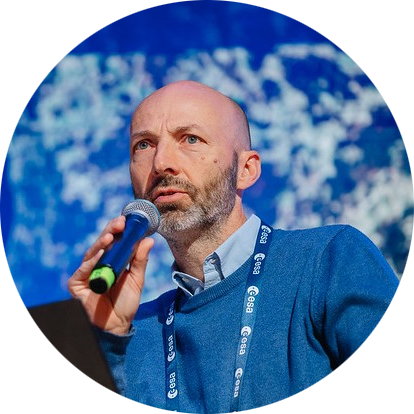
Bio: Pieter Kempeneers is with the Joint Research Centre (JRC) of the European Commission in Ispra, Italy. He holds an engineering degree in electronics and a PhD in science. His research interests include data analytics, with a particular emphasis on remote sensing and image processing. He has a long-standing commitment to the development and promotion of open-source software. At present, he leads a research team on data analytics at the JRC, focusing on the design and implementation of geospatial agentic artificial intelligence systems.
Title: Agentic AI Systems for Geospatial Intelligence in Support of EU Policy
Abstract: Satellite-based Earth observation (EO) has become a cornerstone of evidence-based policymaking. Continuous, global, and objective measurements from space underpin decision-making across a wide range of domains, including agriculture and food security, urban development, disaster risk management, environmental monitoring, and climate change mitigation and adaptation. As Europe advances toward data-driven and sustainable policies, the strategic value of EO data continues to grow.
However, satellite imagery in its raw form does not directly translate into policy-relevant knowledge. Generating actionable insights requires a complex, multi-stage analytical workflow. This typically begins with data acquisition and the selection of appropriate sensors and products, followed by data processing steps such as calibration, geometric alignment, and atmospheric correction. Analytical algorithms are then applied to extract information, detect patterns, or quantify change. Finally, results must be translated into intuitive visualizations, maps, indicators, and models, that support interpretation and decision-making.
Artificial intelligence has emerged as a powerful enabler across this entire workflow, yet different paradigms offer distinct trade-offs. AI-assisted coding tools can support scientists and analysts in implementing EO workflows more efficiently, reducing development time while preserving methodological control. At the other end of the spectrum, large generative and multimodal foundation models promise to abstract away much of the analytical complexity, delivering insights directly from imagery. While powerful, these approaches often sacrifice transparency: as model architectures and training data grow in scale and complexity, it becomes increasingly difficult to explain how specific outputs are produced.
For the Joint Research Centre (JRC) of the European Commission, which provides independent scientific evidence to support EU policy, transparency, traceability, and reproducibility are not optional, they are essential. Policy-relevant science must be open to scrutiny, repeatable by independent parties, and robust to methodological questioning. In this context, we explore agentic AI systems for geospatial intelligence. Rather than acting as opaque black boxes, these systems are designed to autonomously orchestrate an end-to-end EO workflow while explicitly documenting every step. The agent selects data sources, chooses algorithms, configures processing chains, and produces final outputs, while maintaining a complete, interpretable record of its decisions and actions.
In this presentation, I will introduce the conceptual foundations of this agentic approach and describe its implementation in a policy-oriented EO context. I will discuss the key design and technology choices, demonstrate the system’s capabilities, and critically reflect on its current limitations. Finally, I will share lessons learned and outline how agentic AI can contribute to trustworthy, transparent, and scalable geospatial intelligence for sovereign European policymaking.
Tuuli Toivonen
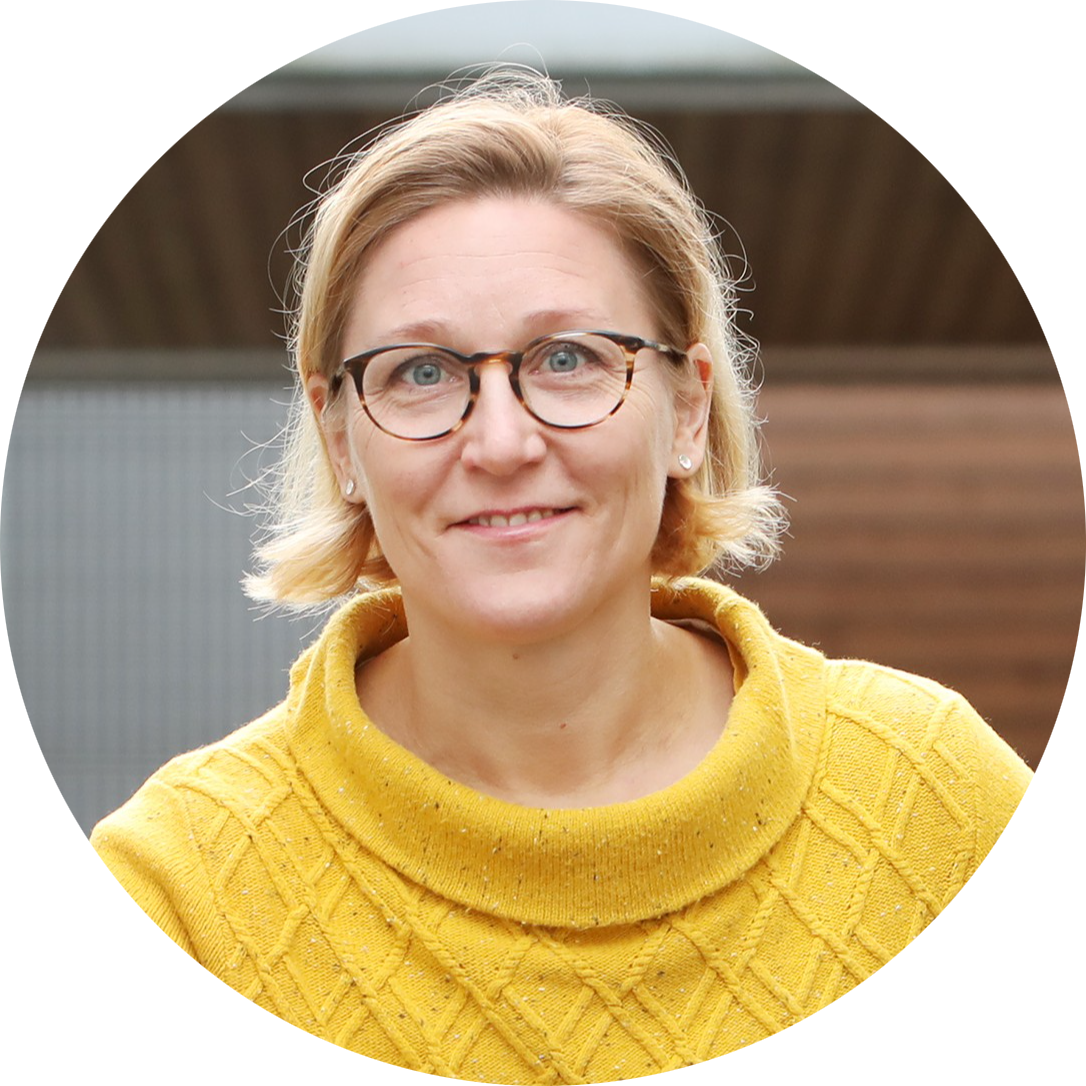
Bio: Tuuli Toivonen is a geographer, professor of geoinformatics and an ERC Consolidator Grantee at the University of Helsinki, where she leads the interdisciplinary Digital Geography Lab at the Department of Geosciences and Geography. Her research focuses on understanding the dynamics of people and places, and their interaction, in both urban and natural environments, using spatial accessibility and mobility as key perspectives. An important part of her work involves developing approaches that leverage open and big data, spatial analytics, and machine learning. In addition to applied geoinformatics, her research contributes to urban geography, land-use and transport planning, sustainability science, and conservation geography.
Title: Making mobile big data actionable for spatial planning and management – examples from Finland and beyond
Organisers